
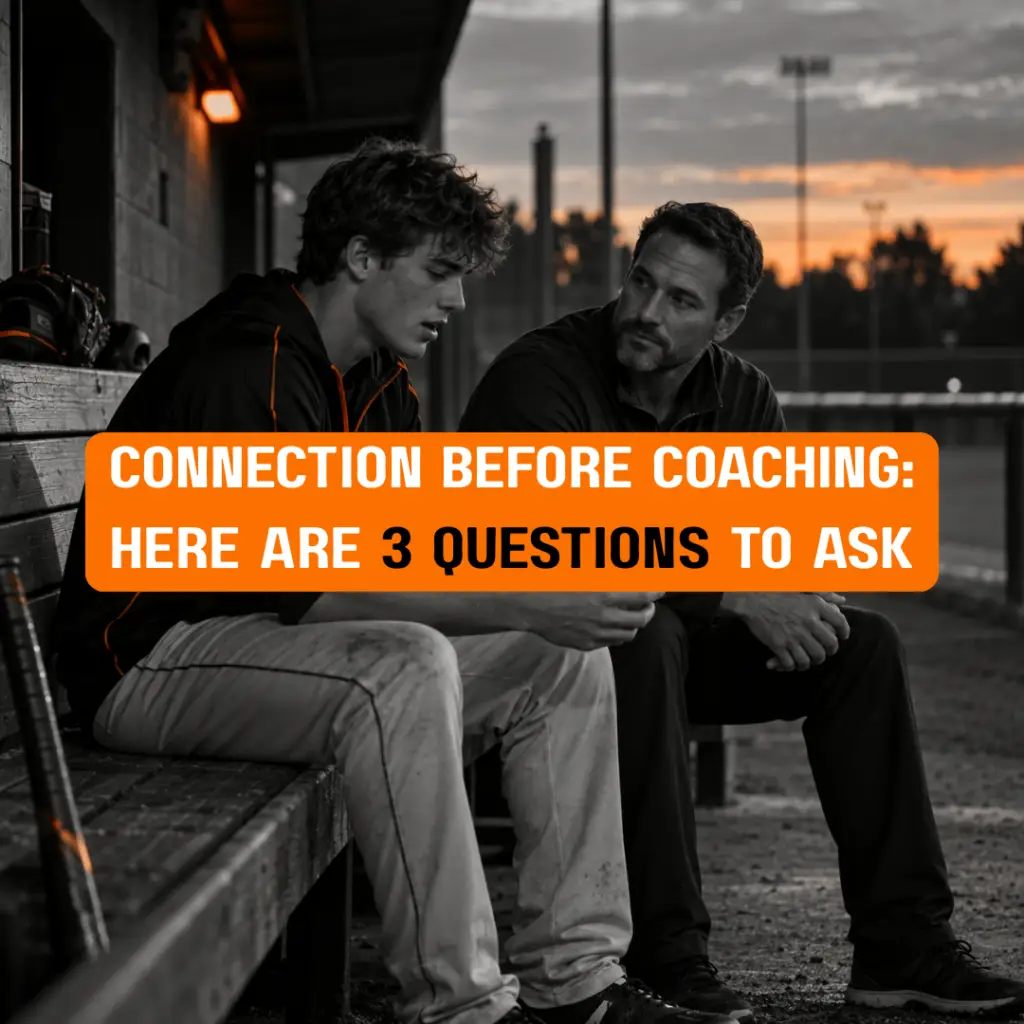
Connection Before Coaching: 3 Questions to Ask Before You Try to Fix It
A Sunday evening phone call. A college freshman. A TikTok post from his ex-girlfriend.
That 40-minute call is the clearest example I’ve seen in a while of why connection before coaching matters more than almost anything else you can offer a struggling young athlete.
A Freshman’s Hard Week
In early September, I spoke with a first-year college baseball player on a Sunday evening. He’s the same young athlete I wrote about in part one of this story: Does My Athlete Need a Mental Performance Coach?
He moved onto campus on August 18th. The first couple of weeks wore him out.
New roommate. New teammates. No room to just be.
By the time we talked, the exhaustion had faded. He was finding his people. Baseball was going as well as it had before college.
All good, right?
Nope.
His ex-girlfriend posted on TikTok. Out of nowhere, it was the only thing on his mind.
Should he try to get back together? Should he ignore it? Should he say something, expecting nothing in return?
I didn’t have the answer.
That wasn’t the point.
I mostly listened. I asked questions. I let him work through it.
Like most things an 18-year-old college freshman goes through, this was brand new. It brought up all kinds of feelings, and he needed room to sort them out before he could decide anything.
Why Connection Before Coaching Beats Fixing the Problem
So, what does 40 minutes of listening have to do with mental performance coaching?
A lot.
Connection before coaching isn’t the warm-up. It’s the work.
I recently came across an Instagram post from a gambling addiction counselor that hit home. He was talking about what it takes to help someone recover.
His main point: being present with a client (paying attention, staying patient, listening without judgment) isn’t a soft skill.
It’s the mechanism.
He said something else that stuck with me. Oxytocin, the hormone tied to bonding, isn’t just for mothers nursing babies. Being understood as an adult, he explained, triggers something close to what a baby feels when being held.
Without that connection, he said, there’s no recovery.
I know that firsthand.
I’m in recovery from a gambling addiction myself. On October 3, 2026, I marked 14 years free.
And he’s right. I wouldn’t have made it without people who were willing to listen to me before they ever tried to fix anything.
That’s not unique to addiction recovery.
It’s true for a freshman processing his feelings about an ex-girlfriend.
It’s true for a young athlete figuring out a new living situation.
It’s true for any young athlete stuck in a slump.
Without connection before coaching, getting buy-in from a young athlete, or any human being, is really hard.
What Research Says About Listening to Teens
This isn’t just something I see in my sessions.
In 2021, researchers from the University of Reading and the University of Haifa asked 1,001 teens, ages 13 to 16, to watch videos of a parent and teenager talking through a difficult situation. In one version, the parent listened attentively. In the other, the parent seemed more distracted and made less eye contact.
The teens who watched the attentive parent said they would feel better about themselves and would be more likely to open up again in the future. You can read the University of Reading’s summary of the study, which was published in the Journal of Experimental Child Psychology.
Notice what the parent in the good version didn’t do. They didn’t solve the problem.
They listened.
For parents of young athletes, that matters. If your athlete believes you’ll listen, they’ll keep bringing you the hard stuff.
The slump. The coach who stopped playing them. The recruiting worry they can’t shake.
That’s when you can help the most.
What Connection Before Coaching Actually Looks Like
It’s not advice-giving. It’s not solving.
It’s listening when listening is the only thing needed. It’s asking one more question instead of offering one more answer.
It’s resisting the urge to tell a young person what you’d do. Ask what they’re feeling first, then help them figure out what’s best for them, not for us.
It’s understanding that the “fix it” instinct, as loving as it is, can get in the way of what your athlete needs most:
Feeling like someone has their back unconditionally.
3 Questions to Ask Yourself Before You Try to Fix It
The next time your athlete brings you something heavy, ask yourself these three questions:
- Am I trying to understand what they’re feeling, or am I trying to solve it?
- Am I asking questions, or am I already forming my response while they’re still talking?
- Would my athlete describe our last hard conversation as one where they felt heard, or one where they felt managed?
If an honest answer stings a little, that’s okay.
You’re human. You’re not going to be perfect. The next conversation is another chance to practice connection before coaching.
One Challenge for This Week
The next time you feel the urge to speak while your athlete is sharing something with you, take a breath instead.
Stay quiet a beat longer than feels natural.
See what they say when you give them room to keep going.
That pause is connection before coaching in action.
Frequently Asked Questions About Connection Before Coaching
What does “connection before coaching” mean?
Connection before coaching means building trust and understanding with a young athlete before offering advice, feedback or solutions. The athlete needs to feel heard first. Once they do, the coaching has a much better chance of landing.
Why do young athletes push back on advice from their parents?
Often it isn’t the advice. It’s the timing. When young athletes are still sorting through their feelings, a quick fix can tell them you aren’t really listening. Listen first, and they’re more likely to open up and more open to your guidance later.
How can parents practice connection before coaching at home?
Ask open-ended questions. Let pauses sit. Try not to plan your response while your athlete is still talking. Reflect back what you heard before you share an opinion, and ask whether they want advice or just want you to listen.
Does connection before coaching apply to performance problems, too?
Yes. Slumps, playing time and recruiting stress all work the same way. What happens outside those lines impacts what happens on the field, and a young athlete who feels understood is far more likely to buy into the mental skills that help them respond rather than react under pressure.
When should a young athlete work with a mental performance coach?
When pressure, overthinking or off-field stress starts showing up between the lines, and conversations at home aren’t moving things forward, a mental performance coach can help. My post Does My Athlete Need a Mental Performance Coach? walks through three questions to help you decide.
👉 Schedule a free 30-minute consultation now
Michael Huber, MA, CMPC® holds a master’s degree in sport psychology. He helps young athletes ages 14 to 22 be themselves when everyone is watching, including learning how to navigate overthinking under pressure. Learn more about Michael