
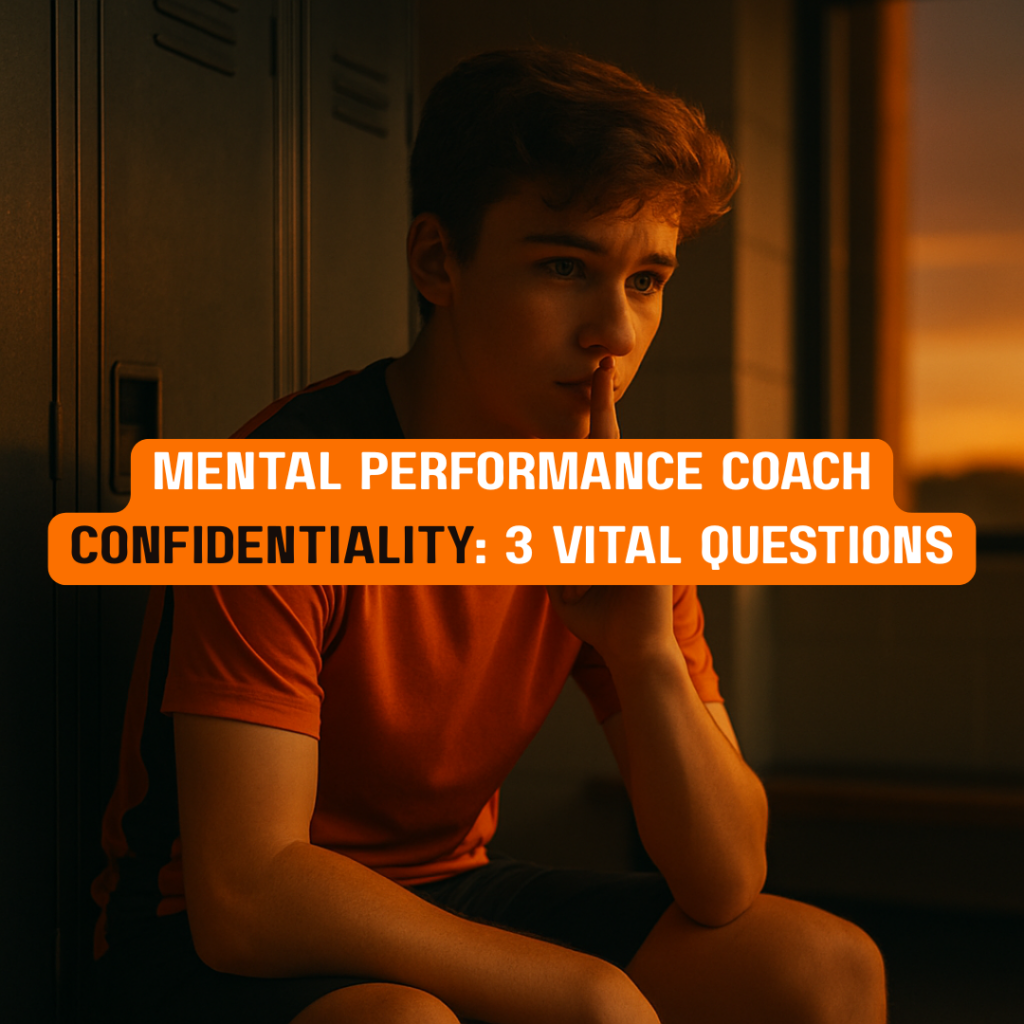
Can You Keep a Secret? Why Mental Performance Coach Confidentiality Matters
Have you ever had someone close to you who couldn’t keep a secret?
I’d be shocked if you haven’t.
What did it feel like when they shared yours?
Probably like crap. It did for me.
And I’m guessing you trusted that person a little less afterward.
That feeling is exactly why mental performance coach confidentiality matters so much. For professional players. For college athletes. And for the young athletes and families I work with every week.
Why a Pro Baseball Player Looked Outside His Own Team
A professional baseball player I work with recently told me why he chose to hire an outside coach. (He’s given me permission to share this, without his name.)
Most, if not all, Major League Baseball clubs have at least one mental performance coach on staff. He has access to that help through his organization.
He still works with me.
Why? He doesn’t trust that what he tells his club’s staff will stay with them.
I haven’t worked inside professional baseball, so I can’t tell you whether club staff share information with the front office or the on-field coaches. But that’s not really the point.
The perception that it could happen is enough. Enough for him. Enough for plenty of other athletes, too.
What Research Says About Confidentiality and Asking for Help
He isn’t alone. A 2024 systematic review and meta-analysis in Psychology of Sport and Exercise pulled together 22 studies on athletes seeking help for their mental health. In the studies that reported rates, only about 22% of athletes sought formal help.
The barriers were telling. Stigma tied to athletic identity. Fear of being cut. And concerns about confidentiality in sport settings.
One thing that helped athletes reach out? Clarity about confidentiality.
So, what does this have to do with your young athlete? A lot.
If a high school athlete thinks their coach, their teammates, or a college recruiter might hear what they said in a session, they’ll hold back. They’ll say what sounds good instead of what’s true. And the real work, the stuff happening between their ears, never gets touched.
Mental performance coach confidentiality isn’t a nice extra. It’s what makes honest work possible.
The Ethical Standard Behind Mental Performance Coach Confidentiality
Certified Mental Performance Consultants® (CMPCs) like me follow the Association for Applied Sport Psychology (AASP) Ethics Code. Its confidentiality standard says CMPCs “do not disclose confidential identifiable information” about the people they work with unless that person has given explicit consent.
The same standard asks us to talk through the limits of confidentiality up front, so families know what stays private and what doesn’t before the work begins.
If you’re part of my community, you’ve probably noticed that I never identify the athletes I work with beyond general descriptions. Any story or testimonial I share is de-identified and shared with permission.
Why I Don’t Share More About the Athletes I Work With
Plenty of families don’t want anyone to know their athlete works with a mental performance coach. Whether I agree with that or not, it’s their right. Respecting it is my responsibility.
Would sharing more help my business? Almost certainly. A video of an athlete telling their own story beats a quote on a Canva graphic every time.
Everybody runs their business differently, and it’s not my place to judge anyone but myself. Honestly, some days I wish I were more comfortable sharing wins. But a few core values drive how I work.
The client comes first.
My reputation is all I have.
I want long-term relationships with the athletes and families I serve.
That’s what mental performance coach confidentiality looks like in practice. Sometimes it costs me a marketing opportunity. It’s worth it.
Join our community’s mission of helping young athletes become confident problem solvers
3 Confidentiality Questions to Ask Before You Hire a Coach
Every family chooses who helps them based on their needs, wants, and values. More importantly, families choose who they trust. That decision belongs to you and you alone.
If you’re considering a mental performance coach (or someone like one) for your young athlete, start with these three questions about mental performance coach confidentiality. For more, read this before you hire a mental performance coach.
One. What stays private, and who hears the rest?
Ask directly. Will anything my athlete says reach their coach, school, team, or recruiters? What will I, as the parent, hear? Do your research and ask every question you need answered.
Two. Is confidentiality spelled out in writing?
Make sure the coaching agreement clearly covers confidentiality, including its limits. If it’s not in writing, it’s a hope, not a promise.
Three. Does this person have my athlete’s best interests at heart?
Trust your instincts here. If the answer isn’t a clear yes, keep looking.
Fear that mental performance coach confidentiality will be broken should NOT be the reason your young athlete misses out on mental performance coaching.
I can keep a secret. Yes, it’s my job. I’m proud of it anyway.
Frequently Asked Questions About Mental Performance Coach Confidentiality
Is a mental performance coach required to keep sessions confidential?
Mental performance coach confidentiality depends on the standard a coach follows. CMPCs follow the AASP Ethics Code, which says they don’t share identifiable client information without explicit consent. Not every coach is certified, though, so ask which ethical standard a coach follows before you hire them.
Will my athlete’s team or school find out what they say in sessions?
Not from a coach who follows that standard, unless your family agrees to it. When a team or school pays for the coaching, the coach should explain who the client is and any limits to confidentiality before sessions start. Ask who is paying and who will hear what.
As a parent, will I hear what my athlete talks about?
That’s something to agree on before the first session. A common approach is to share general progress with parents while keeping the details of each conversation private, so the athlete feels safe being honest.
Are there limits to confidentiality?
Yes. Confidentiality can have limits, for example when someone’s safety is at risk or the law requires disclosure. A good coach explains those limits clearly, in writing, before the work begins.
If you want a coach who keeps what your athlete shares between the two of you, let’s talk.
👉 Schedule a free 30-minute consultation now
Michael Huber, MA, CMPC® holds a master’s degree in sport psychology. He helps young athletes ages 14 to 22 be themselves when everyone is watching, including learning how to navigate overthinking under pressure. Learn more about Michael