
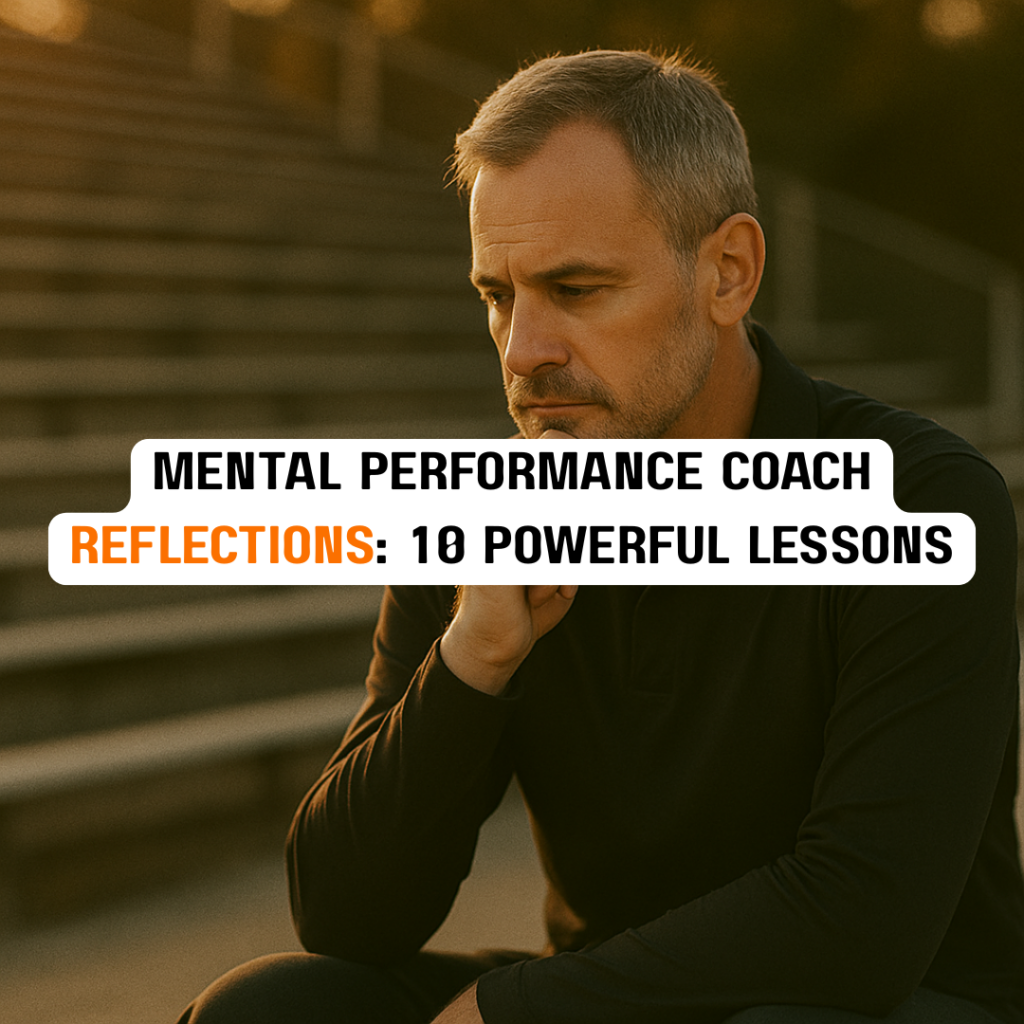
As a mental performance coach, I’m big on asking my athlete-clients to reflect. After a win. After a loss. After a season.
What went well? What didn’t go well? What can they do differently tomorrow?
Reflection is a simple, yet critical skill. It fuels self-awareness and the learning required to get better. And if I’m going to ask my athletes to do it, I need to do it too.
Why Reflection Matters for Athletes and Coaches
Reflection isn’t only for the people I coach. Sport psychology researchers have studied how practitioners reflect on their own work for years. One systematic review of 73 studies found practitioners reflecting on everything from ethics and client relationships to how effective they really were.
The lesson is simple. A good mental performance coach treats their own work the way they ask athletes to treat theirs. Review it honestly. Then adjust.
I’ve written detailed year-end reviews in the past. Not this year. I’m going with a simple list of learnings from 2024.
10 Lessons I Learned as a Mental Performance Coach in 2024
1. Young Athletes Don’t Always Want It as Bad as Their Parents
Parents often see their child’s potential more clearly than the athlete does. That gap is normal. But a parent’s drive can’t replace an athlete’s own motivation.
When the goals belong to the parent, buy-in stalls. Part of my job is helping families talk openly about whose goals they’re chasing.
2. Young Athletes Don’t Always Want It as Bad as Their Mental Performance Coach
This one stung a little. I care about my athletes’ growth, and sometimes I want it more than they do in that moment.
When that happens, pushing harder doesn’t work. I have to step back and let the athlete own the process.
3. Meet Young Athletes Where They Are
I must be intentional about meeting young athletes where they are. Some show up eager to work on their mental game. Others aren’t sure why they’re in the room.
Patience and understanding are critical to get buy-in. There’s no skipping that step.
4. Gen Z Athletes Need to Know the “Why”
Working with Gen Z athletes (ages 12 to mid-20s) requires explaining WHY I’m asking them to do something. Telling them to do it because “I said so” will not cut it.
When they understand the purpose behind a breathing routine or a journaling exercise, they’re far more likely to use it when it counts.
5. Watch Athletes Compete Whenever Possible
I’m much more effective when I can observe my clients in their element. Words and actions don’t always match.
An athlete may tell me they stay composed after a mistake while their body language says otherwise. Seeing them compete closes that gap.
6. Communicate More Often and More Clearly
I need to communicate with athletes and parents more frequently and more effectively. It helps me serve them better.
Short check-ins between sessions keep everyone on the same page. They also catch small problems before they turn into big ones.
7. Set Clear Expectations and Boundaries From Day One
I need to set clearer expectations and boundaries when I start working with new clients, for their sake and my own.
That means being upfront about what a mental performance coach does, what I don’t do, and what each of us is responsible for. Clarity at the start prevents frustration later.
8. Mental Performance Coaching Is the Missing Puzzle Piece
Young athletes spend countless hours on skills, strength, and conditioning. The mental side often gets ignored until something goes wrong.
For young athletes seeking to maximize their potential, mental performance coaching is the missing piece.
9. Not Every Family Wants to Solve the Same Puzzle
Not every athlete or family wants to solve the same puzzle that I do. Some want help getting through one rough stretch. Others want a long-term development plan.
Both are valid. My job is to understand their puzzle before offering a solution.
10. I Can Guide Athletes, But I Can’t Solve It for Them
Whatever the puzzle, I can’t solve it for them. I can only guide them to the solution.
Athletes who find their own answers keep them. That’s how lasting mental skills are built.
What’s Next for This Mental Performance Coach: Goal Setting
Next up: goal setting.
My goal for 2025 is to act constructively on these reflections, to be better for my clients and better for myself. Reflection without action is just remembering.
If you’re an athlete, try this yourself. Write down what went well this season, what didn’t, and one thing you’ll do differently next time.
Thinking About Working With a Mental Performance Coach?
If you’re an athlete or a parent wondering whether mental performance coaching could help, I’d love to talk.
👉 Schedule a free 30-minute consultation now
Michael Huber, MA, CMPC® holds a master’s degree in sport psychology. He helps young athletes ages 14 to 22 be themselves when everyone is watching, including learning how to navigate overthinking under pressure. Learn more about Michael.