
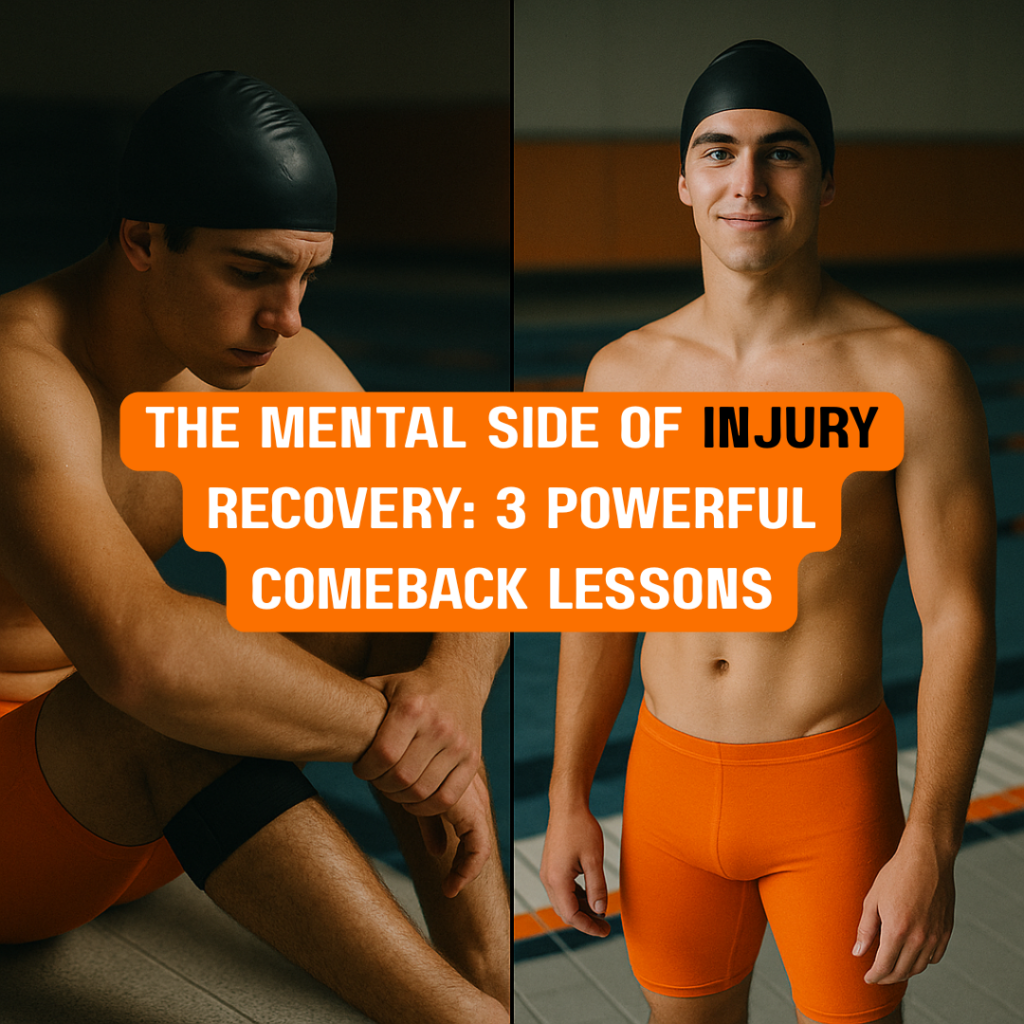
From Setback to Comeback: The Mental Side of Injury Recovery
TL;DR: The mental side of injury recovery can be harder than the physical side. Sam, a high school swimmer, was medically cleared after knee surgery but still in pain, losing hope and thinking about quitting.
In early 2024, I was contacted by the concerned parent of a high school swimmer. We’ll call him Sam.
Our work together focused on what he could control, reframed the setback as an opportunity, and measured each day by his effort instead of his pain. Six or seven weeks later, he was dropping big time at a national meet.
His story is a good example of the mental side of injury recovery, and why it matters as much as the rehab itself.
When the Physical Recovery Doesn’t Match the Timeline
A few months before we started working together, Sam had needed his first-ever surgery.
The expected three-month recovery came and went, but Sam still felt pain and discomfort despite being medically cleared by his doctor. The gap between his expectations and reality was leading Sam to question everything.
What if I never fully recover?
What if continuing to swim makes things worse?
Is it even worth it to continue?
It was this last question that was particularly concerning to his parents.
He was losing motivation and not very hopeful.
His parents did not want him to make an emotional decision to quit swimming without seeing the recovery process all the way through.
Why the Mental Side of Injury Recovery Gets Overlooked
Sam’s experience is more common than most parents realize.
Research backs this up. A 2022 article in Frontiers in Psychology cites research on athletes after ACL knee surgery: about 90% regained normal function, but only 63% got back to their pre-injury level and 44% returned to competition.
The body heals, yet many athletes never fully come back.
That gap is the mental side of injury recovery.
Fear of reinjury.
Loss of confidence.
A lost sense of control.
All of these can linger long after a doctor gives the green light to return.
As the parent of teenage athletes myself, I completely understood his parents’ fear.
Haven’t we all wondered if we are doing enough?
Or if we’re pushing too hard, or too little?
We see their potential and want to help them build resilience, but we also have to let them grow through the struggle.
Getting Help When You’ve Run Out of Answers
Sam’s parents found me through an internet search, hoping to get him help with the mental challenges of his recovery.
Like many of the parents who come to me, they felt their ability to help their child had been exhausted. They were looking for guidance. This is exactly why I got into the sport psychology field.
Sam was skeptical at first. Many of the teenagers I work with are.
Talking to a stranger like me about his struggles wasn’t easy. But once I asked the right questions, we began uncovering what was really weighing on him:
His perceived loss of control.
Lesson 1: Separate What You Can and Can’t Control
So, we talked about the things Sam could and could NOT control.
The three-month recovery timeline was just one doctor’s opinion, not a fact.
His body’s response to surgery and its ability to recover depended on many variables, many of which were out of his control.
He had done everything the doctor suggested to aid his recovery.
So, where did we go from there?

Lesson 2: Reframe the Setback as an Opportunity
We explored the following questions:
What if the prolonged recovery is an opportunity?
What if the injury happened for a reason?
What if you judged yourself based on your ability to withstand the adversity?
I was able to help Sam shift his perspective pretty quickly. This is often the turning point in the mental side of injury recovery: the injury stops being only a threat and becomes something to learn from.
Lesson 3: Judge Each Day by Effort, Not Outcomes
Sam was preparing for a national swim meet, but he was unsure whether he would even compete because of his knee. So, my thought was to break his preparation into small, bite-sized, controllable actions.
I posed the following question:
What if you gave 100% of what you have in training every single day, even if you aren’t fully recovered (yet)?
He started to attack his training this way. He gave full effort based on what was in the tank each day and saw what happened.
So, what happened?
His pain level gradually decreased over the six or seven weeks we worked together leading up to the national meet. He still felt a bit of pain, but he accepted it rather than judging or resisting it.
His confidence increased because he was judging himself on his approach to training rather than the outcomes (Did I go fast? Was I in pain?).
As the meet got closer, Sam was ready to swim. Just getting in the pool and competing was his goal. He had no performance expectations.
In our last session before the meet, we explored Sam’s performance goals.
He considered targeted goals, like making the finals in his best events. However, he didn’t contemplate winning or specific times.
Most importantly, he was EXCITED for the meet.
The Comeback: Where the Mental Side of Injury Recovery Paid Off
How did the meet go?
“Just wanted to let you know S(am) is having an amazing meet. Shaving, chopping actually big numbers off his events… We could not be prouder of him and his grit and resilience with the knee issues from last year. We can’t thank you enough for your help.”
It isn’t always the case that my clients experience this much improvement, either mentally or performance-wise, in such a short period of time.
I certainly wasn’t the one doing the hard work in the pool, and I can’t take much credit. However, I am proud that I helped this young man enjoy competing again and exceed his expectations.
Perhaps even more rewarding was the relief and joy his parents expressed at the outcome.
What Parents Can Take From the Mental Side of Injury Recovery
As a parent, I know how it feels to lack control and often feel confused about how to help my children.
Huge credit to Sam’s parents for seeking out help when they realized they couldn’t do it on their own.
If your athlete is cleared but still struggling, a few things help:
- Watch for signs that the mental side of injury recovery is lagging behind the physical: avoiding practice, talking about quitting, or fear of getting hurt again.
- Ask what feels out of their control, and listen before offering fixes.
- Praise effort and attitude in training, not just times or stats.
- Remember that mental training is a skill that takes practice. As I wrote in The Myth of Being Fixed, one breakthrough rarely lasts without ongoing work.
For a simple tool your athlete can use after any setback, read 4 Steps to Reset Quickly.
Frequently Asked Questions
What is the mental side of injury recovery?
The mental side of injury recovery covers the thoughts and emotions that come with getting hurt: fear of reinjury, frustration with slow progress, lost confidence, and a sense of losing control. It can last after the body has healed.
Why do athletes still struggle after being medically cleared?
Medical clearance means the body is ready, not that the mind is. Many athletes still fear reinjury or doubt themselves, and that hesitation can affect effort, enjoyment and performance.
How can parents help with the mental side of injury recovery?
Listen more than you fix, help your athlete focus on what they can control, and praise effort over results. If they talk about quitting or seem stuck for weeks, consider bringing in a mental performance professional.
How long does the mental side of injury recovery take?
It varies. Sam saw real change in six or seven weeks, but some athletes need longer. Progress usually comes from small, consistent habits rather than one breakthrough conversation.
Did this story resonate? 👉 Schedule a free 30-minute consultation
Michael Huber is a Certified Mental Performance Consultant® with a Master’s Degree in Sport Psychology. My mission is to help athletes ages 14 to 22 be themselves when everyone is watching. Learn more about Michael.